


They may not be as popular as they were before digital technology (unofficially) became the norm, but journals are still a significant tool for anyone who wants to capture and keep special moments, reflections, and experiences. Some people use a journal to monitor their personal growth, eating habits, and fitness goals, and track their emotions. Journaling makes your day-to-day experiences feel extraordinary, providing you with significant insights that you can use for future decisions.
Journaling can actually be applied in different aspects and situations in life, such as when you use cannabis. You may be wondering what's there to journal about – but there's quite a lot, you know, especially since every cannabis experience is different. The effects are never the same from one person to another – they depend on the environment you are in, the product, your chosen consumption method, dosage, sleeping habits, and your mood. You may think you'll remember these details, but your memory can play tricks on you over time. These details that you should input into your cannabis journal. It's the best way to monitor all your sessions, a simple but helpful way of identifying what works for you and what doesn't give you the experience you need.
In this article, we'll discuss how a cannabis diary is essential for effective relaxation, wellness management, intentional and informed consumption, and keeping a personalized record of every cannabis experience. This information will serve as your guide in improving future experiences, avoiding mistakes, and making better decisions. So your journal is not just a collection of thoughts, notes, and experiences; it becomes a helpful partner in your cannabis journey.
Table of Contents
What A Cannabis Journal Is For
As mentioned earlier, a cannabis journal is a personal record or diary where you record or take notes of your cannabis experiences. All the details that you enter in your journal can help you evaluate entries and make an ongoing assessment of which products affect you positively and which ones are not good for you. You don't have to guess which vape or edible can get you energized or help you sleep. As such, your journal helps you not to rely on your memory alone, which can turn fuzzy in a matter of days or months.
Taking note of how much cannabis you consumed, which products you have tried, and what your reaction was before, during, and after cannabis use are some of the most important details that you write in your journal. And these details are not just notes; they are information you can use as a log to improve your cannabis experience by recording the effects of specific cannabis strains.
Your journal entries can be a simple list, or they can be a detailed record of your session. You can also input an after-session note or choose to include specific details, such as environmental factors, dosage, cannabinoid percentages, your mood, and terpene profiles. There is no right or wrong cannabis diary process, but you do need to be as consistent as possible, which means you have to input the details in your journal every time you have a cannabis session.
The material for your journal is your choice, whether you prefer an analog option like a paper notebook or a digital tool such as an app, software, a ready-to-print document, a digital document, or a spreadsheet. The goal is to monitor your cannabis use while also tracking cannabis effects, giving you more value when deciding what to use again.
In some cases, cannabis journals are used for recording session details of medical cannabis patients. This helps them keep track of and manage their symptoms, as well as provide information they can use when talking to their healthcare providers, primarily in terms of their cannabis use experiences,
While it is used for tracking every cannabis session, a weed journal does not necessarily contain all the tiny or insignificant details. The journal is a learning tool that helps make every experience significant and memorable. Also, cannabis effects vary greatly from one person to another. So the details in your journal are all reflections of something that is uniquely yours – experiences that are not like the others'.
Additionally, while they do not carry cannabis journals, legal dispensaries like The Spot NV in Vegas can help make your cannabis experience satisying and memorable – and visiting a dispensary is a significant experience that you should include in your journal.

Why Does Cannabis Affect Everyone Differently?
No two cannabis experiences are ever the same – because the effects are different for everyone. So if you recommend a product to your friend and their experience is different from yours, don't worry. You did not do anything wrong. The effects of cannabis differ from person to person. So if your friend was sleepy after consuming cannabis, and you are calm and relaxed, both of your reactions are valid. This is why cannabis tracking is important.
Different factors help determine how your body responds to cannabis. Gaining a better understanding of these factors is essential in learning the importance of keeping a cannabis journal.
Your Body Chemistry Matters
Your body chemistry is a significant factor in determining how cannabis will affect you. Your body weight, metabolism, age, overall health, and genetics all affect the way cannabis is processed in your body.
One of the major influences is the ECS or endocannabinoid system, an organized network of receptors in the body that works to regulate pain perception, memory, appetite, sleep, mood, and other functions. Everyone has an ECS, but they do not function the same way. This is why your friend has a different reaction to the same product that you also consumed – the same amount and the same variety.
Another important factor is your tolerance level. For those who use cannabis daily, a higher dose is necessary if they want to achieve the same effect as a person who uses cannabis. With your journal, you can monitor changes in tolerance over time, allowing you to adjust your consumption accordingly.
Cannabis Products Vary
Even if two cannabis products look the same, the results they produce will be different. They vary in several ways:
- Cannabis products have different cannabinoid content, including CBD and THC levels, as well as other naturally occurring cannabis compounds
- Different terpene profiles are also a significant factor
To explain this, imagine you and your friend taking cannabis. Your friend uses cannabis with high limonene levels, while you prefer the one with high myrcene content. The effects differ: your friend feels uplifted, while you feel more relaxed. Terpenes are the aromatic compounds that give cannabis its distinct flavors and scents.
Often, you won't notice small details like this, or you'll easily forget them. With a marijuana journal, you'll have something to write and record on, allowing you to review and understand which product characteristics are ideal for your needs and preferences, and compare strains by price, THC percentage, aroma, and flavors.
Dosage is Important, Too
One of the mistakes that cannabis users commonly commit is believing that using more is always the best way to go. In reality, though, having too much can be bad. The right dosage is important if you want a satisfying cannabis experience.
A small dosage of edibles can make you feel calm and relaxed, but a double dose will most likely leave you feeling sleepy, heavy, and uncomfortable. Additionally, one or two puffs from your vaporizer will have a different effect compared to consuming a full pre-roll.
All these dosage details and their effects should be regularly recorded in your journal. Checking the effects will give you an idea of what works best for you, effectively eliminating guesswork. Over time, you'll easily identify which dosage range is ideal for certain situations, such as when you want to sleep better, to be more productive in the daytime, or when you want to unwind after a busy day at work.
How You Consume Cannabis: Lifestyle and Environment are Important Factors
Choosing the right product and dosage is just one part of the equation; your lifestyle and environment can also influence how cannabis affects you.
To determine your physical and environmental conditions, you'll need to answer the following questions:
- Did you eat before using cannabis?
- Were you well-rested?
- Were you anxious or stressed?
- Did you consume cannabis alone or with friends?
- Were you indoors, outdoors, or in a car?
- What time of day did you consume cannabis?
These are important factors to consider because they influence cannabis' effects on you. For example, if you haven't had any meals and consumed edibles, the effects may be stronger than you expected, especially when compared with consuming edibles after finishing a complete meal. Additionally, there are cannabis products that are more effective when consumed at home instead of in crowded places, such as parties or any social event.
Record your answers to the abovementioned questions and input them into your cannabis journal to prevent yourself from assuming why a product was ineffective. This way, you can easily monitor the factors that affected the outcome of your experience.
Learn From Your Experience
Since you already have your journal, stop relying merely on friends' recommendations and online reviews. Yes, these are helpful, but they're not as detailed and factual as your experiences. No third-party insight can replace your own experiences. Besides, your friends' experiences may have worked for them, but there's no guarantee that they will work for you, too.
This is what makes your journal valuable. It can act as your personal database and data record, helping you test which strains work for your routines and preferences and generate ideas for future sessions, routines, or products to try. Every time you add an entry, you discover something new about your needs and preferences, your tolerance levels, and how your body responds to cannabis.
This is where keeping a cannabis journal becomes especially valuable. The concept is simple: use your own records rather than chasing trends or relying solely on other people’s opinions. You begin building your own personalized database. Each journal entry teaches you something new about your preferences, your tolerance, and your body’s unique response to cannabis.
If you make cannabis journaling a habit, you'll soon be comfortable and confident in making informed decisions. Consistently tracking cannabis effects will also help ensure better future experiences, while improving your general cannabis wellness journey and helping you spot the best activities for certain strains, from music-making to your usual routines.
6 Reasons for Keeping a Cannabis Journal
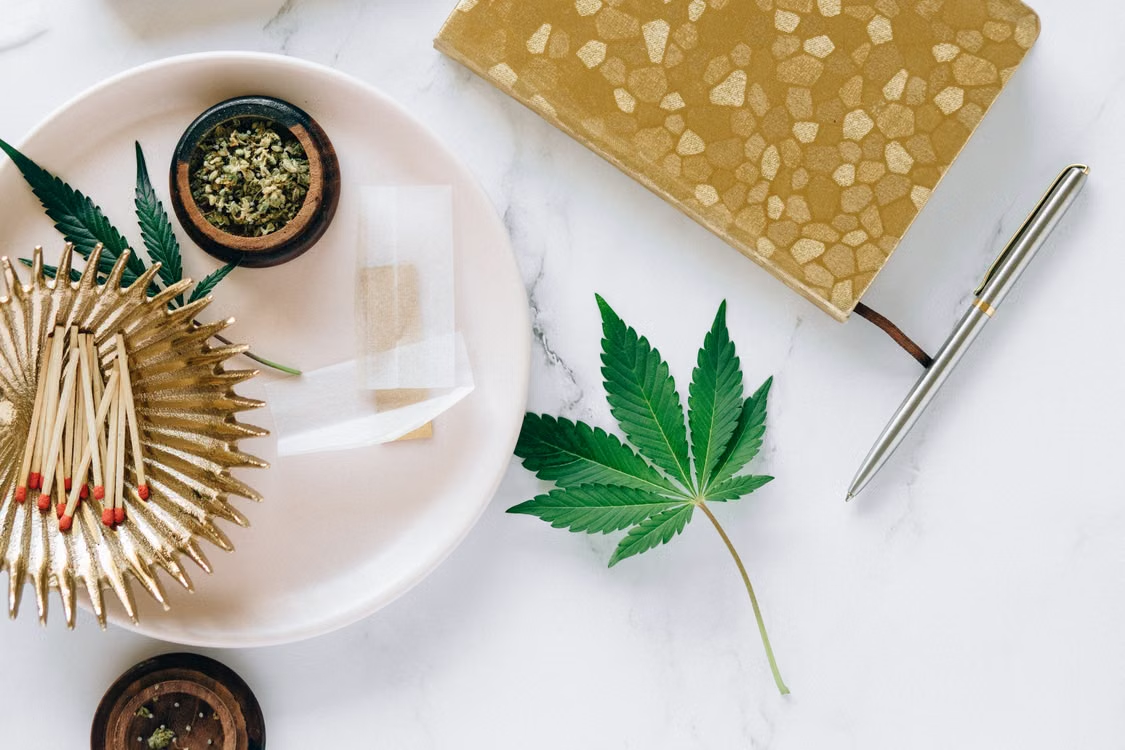
You may look at your cannabis journal as extra work, but it is not – because it is essential. It is about ensuring that every cannabis experience you have is satisfying and meaningful. All that you need is a few minutes after every session, where you pause, reflect, and record your observations so you can add more significant details to your personalized guide. These details will help you make smarter decisions and shape a more intentional strategy for future cannabis purchases and sessions.
Whether you're a new user or have been enjoying cannabis for years, journaling will help you make every session more satisfying and meaningful because you know and understand your needs and preferences. Journaling will also help you enjoy the best values of the products that you choose.
Here are the six reasons why you should keep a cannabis journal.
1. It Tells You What Works for You
As mentioned earlier, no two cannabis experiences have the same effects. As such, you won't find a universal best cannabis product. An edible may work best for you, but it won't have the same effect on your friend. In the same manner, your friend may have a liking for vape cartridges for relaxation, but this option does not work for you.
With your cannabis journal, you can record the details of all your experiences, including the dosage, your tolerance level, and other similar factors; if you use a strain journal app, it can organize those entries and surface your journal’s highest rated and lowest rated strains based on the ratings you record. Once you've established your experience database, you'll see a pattern, and you can use this pattern to improve your experiences. You'll also have more confidence in choosing the products you want.
2. It Eliminates Guesswork
Have you ever bought a product because you thought it was good, but eventually forgot about it later on? This is why cannabis tracking should be a priority for you.
If you bought a cannabis product, the first thing you should do is input its details into your journal, including its consumption method, dosage, and, of course, product information; if you bought it from a dispensary website, you can also copy the listed brand, strain, and potency into your journal for a more reliable record. After using it, take note of your overall experience and enter this into your journal. Don't rely on your memory alone if you want a reliable record of the product; use your journal. Then, when you want to use the product again, you'll know how and where to purchase it so you can recreate your favorite cannabis experience.
3. It's Financially Practical
Trying as many cannabis products as you can may be fun, but it's not practical in terms of your finances, especially on the consumer side of the market where repeated trial and error adds up fast. You'll be buying one product after another until you find one that fits your needs.
With a weed journal, you'll have an easier (and faster) time identifying the products that you've consumed – which ones are best, and which ones are not ideal for you, so you can focus your money on what delivers the most tangible benefits for you. As such, you won't need to keep buying products just so you'll find one that works best for you.
Your journal is your learning material for your cannabis experience.
4. It Helps You Fulfill Your Wellness Goals
Regardless of what your cannabis wellness program is, you must include your regular journal inputs. These details will include observations and recording of vital information, such as your reaction to a particular product and its benefits.
Your journal will help you determine which of the products effectively helped you relax, sleep better, and feel better; some cannabis strains can help with specific medical conditions, while others may hurt sensitive medical conditions if their effects do not match your needs, which is especially helpful when comparing strains for wellness support and noting what to avoid with sensitive medical conditions. Edibles, for example, may help you achieve restful sleep.
Your journal can also be a wellness tool.
5. It Prevents Unpleasant Experiences
You may have had cannabis sessions that you want to forget because they were unpleasant, unforgettable experiences. You may have consumed more than necessary, or you may have had dry mouth.
Use such experiences as a learning opportunity. Learn from your mistake – maybe you chose the wrong product. Your marijuana journal will help you keep track of what happened, so you can avoid doing them again.
6. It Encourages Mindful Cannabis Use
The most important benefit of having a journal is that it helps you become more intentional, more mindful.
You no longer consume cannabis immediately, on autopilot. Instead, you find time to learn and understand how your mind and body react to different products. You become more aware of your situation, preferences, and your habits.
As such, a cannabis diary is more than just a notebook; it is a material that helps your cannabis use from small, isolated experiences into a bigger and more significant ongoing learning experience.
What A Cannabis Journal Should Contain
You can decide what kind of cannabis journal you will use. It can be a simple list journal or one that is as detailed as possible. What's more important is that you record the right information, which will help you recognize patterns after several cannabis sessions.
If this is your first time to do cannabis tracking, start simple and focus on the basics. As you move along and your preferences become clearer, you can start adding more details.
Here are the most vital details a cannabis journal template might include:
- Date and time you consumed cannabis
- Product name and brand of cannabis, plus the specific strain name when relevant
- Cannabinoid content or CBD and THC levels
- Consumption method: ate an edible, smoked, used tincture, or used vape?
- Dosage – how much cannabis did you consume? Example: 5 mg edible or two puffs
- Your mood before consuming cannabis
- Effects – energized, focused, relaxed, sleepy, or creative?
- Side effects – Examples: anxiety, dizziness, or dry mouth
- Overall rating (Assign a score to your experience and note which product attributes affected quality, including price, THC percentage, aroma, and flavors, plus whether you’d use the product again or not)
You don't have to input long, novel-like entries. A few sentences will do. You can also write a list. As long as you provide valuable insights, length won't matter.
Who Are the Ideal Cannabis Journal Users?
Aside from experienced enthusiasts and medical cannabis patients, a cannabis journal can also benefit casual users and anyone exploring cannabis more intentionally who wants to know and understand the effects of cannabis on their body.
A cannabis journal isn’t just for medical cannabis patients or experienced enthusiasts. It can benefit anyone who wants to better understand how cannabis affects them.
Cannabis journaling is most helpful if you are:
- First-time cannabis user who wants to learn what works for you
- Exploring different consumption methods, or various products and strains
- Incorporating cannabis into your cannabis wellness routine and using a journal to build a simple plan
- Trying to determine the best dosage for a satisfying experience
- Doing your best to avoid repeating unpleasant experiences
- Planning to study tracking cannabis effects over time
Whether you prefer a small, simple journal or a full, detailed cannabis diary, do not forget your main purpose for journaling: to become more informed, to become more mindful, and make intentional choices according to your experiences.
Simple Tips for Keeping a Cannabis Journal
Here are a few simple tips that can help you enjoy:
- Ensure that your entries are simple and easy to understand
- Your entries should be easy to edit
- Don't waste time. Record your details as soon as you are done with the cannabis experience
- Be honest in writing your experiences, both the positive and negative experiences
- Check and review your journal from time to time to examine patterns and support future purchases with clearer notes on what you liked or disliked.
Don't aim for perfection; aim for consistency. Consistency is more important because it will help show development, leading to experience patterns that you can use to improve your cannabis sessions.
Cannabis Journal: Your Cannabis Journey Companion
Every cannabis experience is unique because cannabis affects people differently. This is why it is important to record the details of every experience, even if you already gathered online reviews and recommendations. Records are still the best for keeping valuable information. And these records are known as journals.
Keeping a cannabis journal helps you determine what products, dosages, and consumption methods are ideal for your preferences, your lifestyle, and your goals. This journal will, over time, turn into a personalized guide that can help you make smarter decisions, avoid trial and error and guesswork, and get the best out of every cannabis experience.
You don't need any complex process or expensive materials if you want to start a journal. All that you need is a simple notebook, open a notes app, or create your own cannabis journal template. You'll also need to be determined and committed to filling up your diary, especially since every input takes you closer to understanding what works best for you.
If you’re looking for a good cannabis experience, look no further than The Spot NV. Their team is committed to helping customers like you choose the best options for a satisfying and meaningful experience – one that you won’t mind writing about in your cannabis journal.